netScope is for us one of the strongest references when we want to demonstrate that we do not develop only a single client, but can sustain a technically clean product line across multiple product and operational stages. Starting from a specialized viewer for demanding image data, a C# product family emerges here with local deployment, team scaling stages, server operation and a cloud perspective.


From the specialized viewer to a genuine product family
For clients in particular netScope is so interesting because this reference shows more than a single desktop client. The solution starts with a high-performance viewer for Whole Slide Imaging, CZI and large image repositories, progresses through team stages such as Desk and Group into central server scenarios and does not end with the first delivery, but continues into a cloud expansion stage with product logic, approvals and user management.
At its core it is about technically demanding data models and very large image repositories. Image pyramids, channels, annotations, snapshots and navigation must interact so that users encounter no technical friction. This is exactly where it becomes apparent whether a development partner merely builds screens or also knows how to make data-intensive specialist software usable, performant and maintainable over the long term.
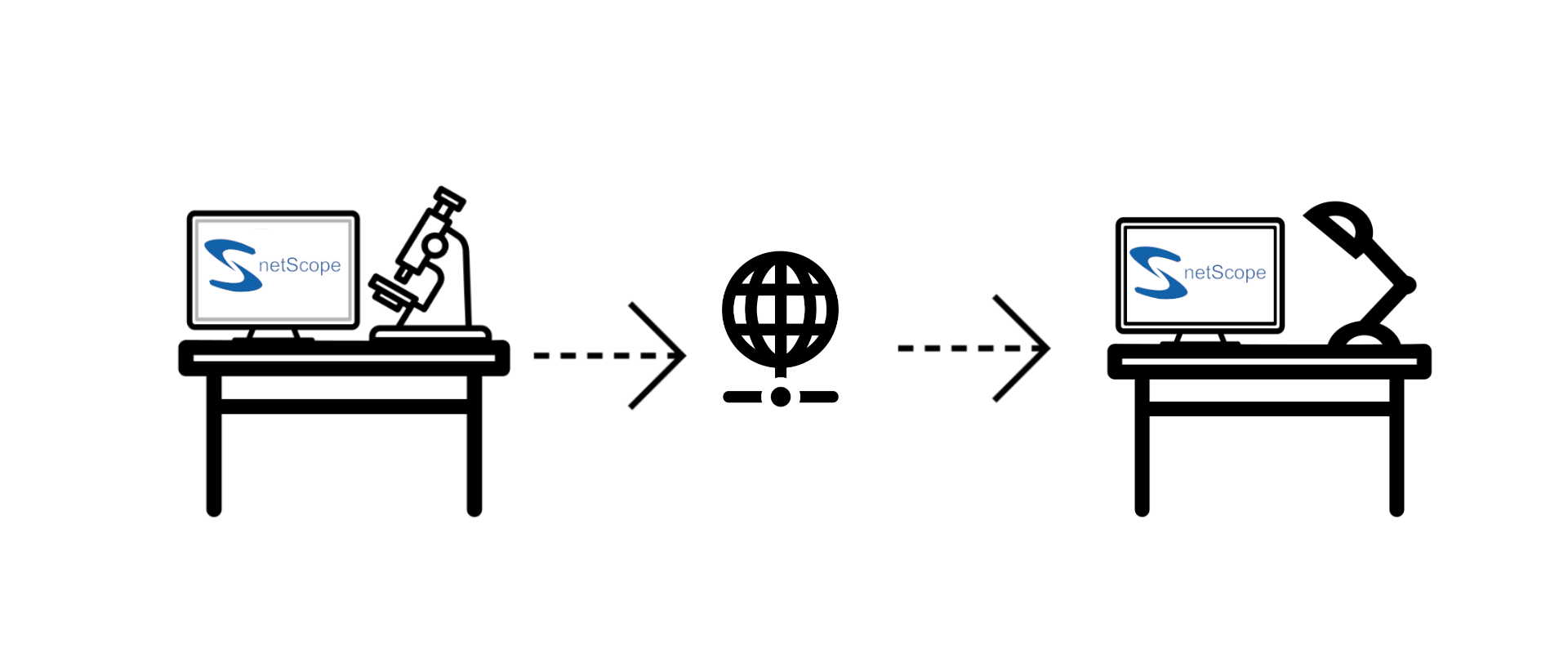
With netScope Desk the first real networking step begins: a workstation shares slides on the local network, other users access them with the viewer. netScope Group continues this line and enables collaboration over a shared data basis. This makes visible that the same domain-specific assets do not end on a single workstation, but can grow in a controlled way toward teamwork.
With the server this becomes a full multi-user system. The publicly documented server line names Microsoft IIS, .NET, SQL Server and Single Sign-On via SAML 2.0. Added are roles such as Reader, Writer and Admin. This exact combination demonstrates that we do not only build viewer surfaces, but are able to transfer projects, permissions, users, central data storage and web operations into a clean architecture.
- technically deep viewer for demanding formats and large data volumes
- controlled expansion path from a single workstation to team tiers, server and cloud
- multi-user operation with a role model, centralized data storage and web administration
- product development with genuine ongoing evolution instead of one-off project delivery
Why netScope is so informative for new clients
Product development instead of a single feature
netScope demonstrates that we can think across multiple product stages. Those who start locally, plan to connect teams later and will need server or cloud in the medium term see here a real expansion path instead of a marketing slide.
Technical credibility through depth
Desktop, file-format expertise, performance, permissions, web administration and operations interlock here. This exact mix determines long-term viability in demanding domain projects.
Sales benefit for your own project
If your project requires specialist data, multiple user tiers, controlled sharing or later cloud scenarios, netScope is the appropriate reference that we not only understand this path, but have already implemented it.
netScope as a reference for scalable product development
For companies that do not want a domain-deep solution to stop at a local initial release, netScope clearly shows how we combine technical substance, product thinking and an orderly expansion path.
Read the relevant FAQ on netScope
We address the deeper architectural questions behind netScope in the FAQ center in more detail: product expansion, C#, services, portals, and the technical path from local deployment to centralized operating models.