netNotdienst is one of our most important references when we want to demonstrate that we are strong beyond traditional screen software. This solution connects client, server, installation, network, code logic, printing and defined state transitions in a real-world pharmacy operation. Projects like this reveal whether software is merely showcased or can truly assume responsibility in everyday operation.
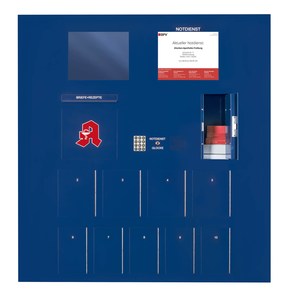
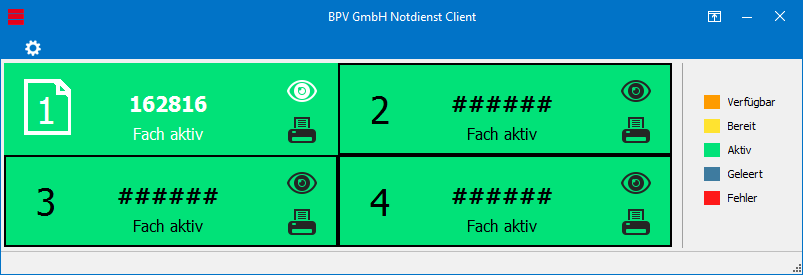
Client, server, hardware and state logic as a unified system
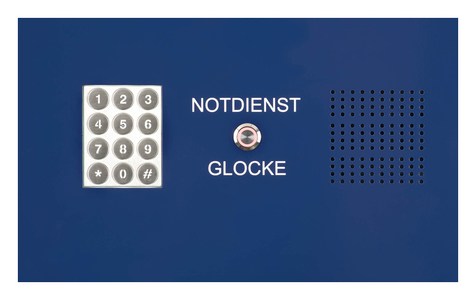
The publicly documented BPV solution describes a clear two-component model. The server runs on the display computer, manages the pick-up locker system, shows the emergency service during idle and provides visual feedback to the customer upon interaction. The client runs on tills or workstation PCs and implements the actual operator logic for staff: reserve a compartment, assign a code, print a receipt, place goods and advance the status.
Particularly robust is the state logic. A compartment is not simply open or closed, but progresses through defined states such as available, ready, active and emptied. In this way a physical box becomes a controlled digital process. Staff always know the state of a delivery, the customer receives a clear feedback channel and operator errors are made technically more difficult.
In addition there is the security logic around pick-up codes, waiting times, expiring codes and logging. Such details turn an installation into a resilient operating system for a real-world process. For clients this is a strong signal: we do not build decorative digitizations, but systems that must deal with real risks, real actions and real error consequences.
The reference is clear from an infrastructure perspective as well. Communication takes place over the local network via TCP/IP, by default on port 8080, with a sensible recommendation to assign a static IP to the display workstation. In addition there are print paths for the pickup receipt and a configurable receipt design. Details like these separate calm enterprise software from hectic rework.
- Server on the display workstation as the technical controller for the device, acknowledgements and process state
- Client on POS and workstation terminals for fast, unambiguous operation by staff
- clear functional statuses instead of vague operation sequences: available, ready, active and emptied
- code logic, receipt printing, network paths and hardware integration as part of the same architecture